AASR Researcher of the Month – Dr Daren Ray
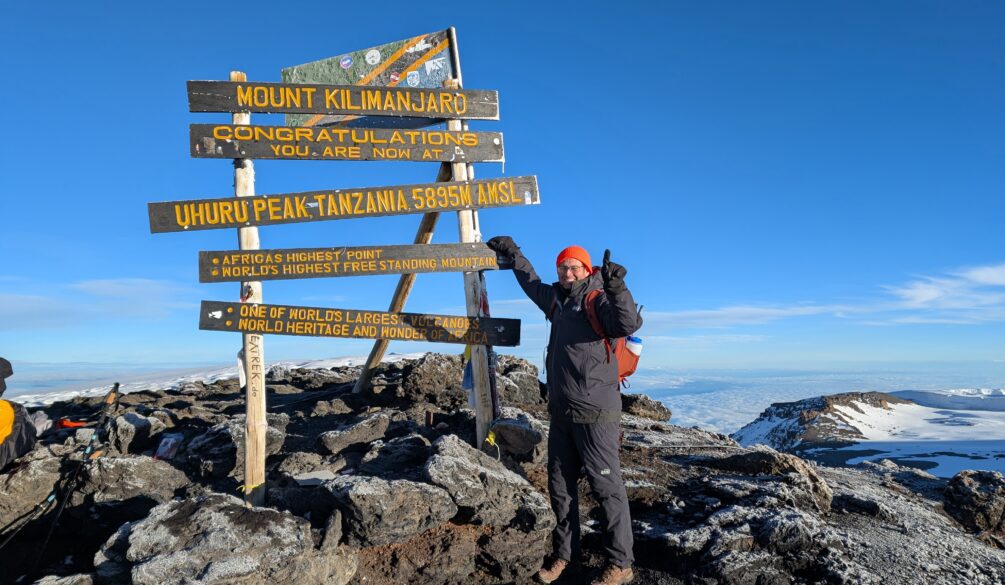
Daren Ray (PhD) teaches African, Islamic, and world history at the Brigham Young University, United States. His research intersects historical linguistics, archaeology, comparative ethnography, oral traditions, and historical documents.
Tell us about yourself, your academic background and research interests.
I am a historian of East Africa. I received my PhD in African history in 2014 from the University of Virginia where I studied with Joe Miller. I also took some classes with Cindy Hoehler-Fatton, who I was happy to find out was a member of AASR when I joined a few years ago. My research draws on historical linguistics, archaeology, comparative ethnography, and oral traditions, as well as historical documents. I use these sources to trace how collective identities (including religion, ethnicity, race, clan, lineage, etc.) have transformed over several centuries. I’m beginning a new research project on how Muslim communities have used land trusts (waqf) to preserve kinship networks and identities through imperial and national transitions in East
Africa.
Tell us a little bit more about your recently published book.
My recently published book, Ethnicity, Identity, and Conceptualizing Community in Indian Ocean East Africa, provides a 2000-year narrative of the ancestors of ethnicity in littoral East Africa. I trace the distinct origins of lineage, clan, clan confederations, age-sets, and title societies as far back in time as possible. Then I show how these different conceptions of community came together during the colonial era when Africans reconfigured them as the constituent parts of “tribes”. Although it focuses on the Swahili and Mijikenda communities, the methodology could be applied more widely to explore deep histories that connect the precolonial and modern eras.
In what ways do you think your research addresses pressing societal challenges?
Ethnicity remains an important part of self-identification and political mobilization for many people in East Africa. Instead of dismissing ethnicity as a pre-colonial vestige unsuitable to modern politics or a mere invention of the colonial state, my research demonstrates why people often have such strong commitment to their ethnic identities. The current configuration of heritage into ethnic groups is novel, but the values and understandings of the world that people associate with ethnicity are older and more integral to everyday relationships than researchers who focus ethnic politics usually acknowledge. At the same time, my book shows how communities can reinvent and reapply their collective heritages to form wider associations and reconfigure their societies. The people I interviewed for my research reminded me over and over again that loyalty to one’s ethnic identity does not always lead to political division. Instead, we can honor one another’s cultural heritage as we build larger, more diverse associations and communities.
How do you see your career/research develop and evolve in the future?
I have two lines of research that I am developing. First, I am working with Jim Law, a linguist at my institution, to create a translingual database (hald.byu.edu) of African language dictionaries produced between 1830 and 1930. In many cases, these dictionaries were the very first attempts to document an African language in written form. The primary goal is to make these dictionaries available to researchers and students of African languages so that they can investigate multi-lingual connections more easily. In addition, I hope that the database will help reveal conceptions in African languages that may have been displaced by European vocabulary. My second project will be a social history of land trusts (waqf). I am still wrapping my head around the expansive literature on this Islamic legal institution. I was attracted to the subject because every time I ask someone in Kenya about waqf land, they have so many stories to tell – about that mosque, this cemetery, a nightclub, a soccer field. Waqfs are a crucial part of the social landscape that Muslim communities create, and I want to explore how that works in East Africa compared to other parts of the Indian Ocean and the Muslim world.
Based on your experience now, what advice would you give your younger self?
Do less! I have a tendency to take on more projects than I can realistically handle. The other piece of advice I would give is to “touch” your research project every day. Even if you need a break, or have other deadlines, just spend 10 minutes thinking about the next task, reading another article, revising one paragraph. That helps with the transition once you have a large span of time to do lot of work. And if you never get that time, then chipping away at it each day produces results too.
I have just recently joined the AASR, but I am looking forward to the networking opportunities it provides. At the AASR conference in Kenya, the first question out of everyone’s mouth seemed to be “what can we work on together?”. I was able to host one of the members at my campus last year, and then he returned the favor by taking me out to lunch when I was passing through Kenya. The AASR also gave me some opportunities to visit new places in Africa that would normally be out of reach for me.
What challenges have you faced in your career, and how did you overcome them? What lessons did you learn?
My biggest challenge has been to keep moving my research forward when teaching and administrative responsibilities increased. I tend to focus on teaching preparation because I receive almost instantaneous feedback from students. I get to see the results of the research I do for teaching almost immediately. The research cycle is much slower; so, I have to build my research activities into my daily schedule, or it doesn’t happen. That’s one reason conference associations like the AASR are so important; it gives us a goal and a deadline to have something ready to share.

