AASR Researcher of the Month-Dr Claire P. Ayelotan
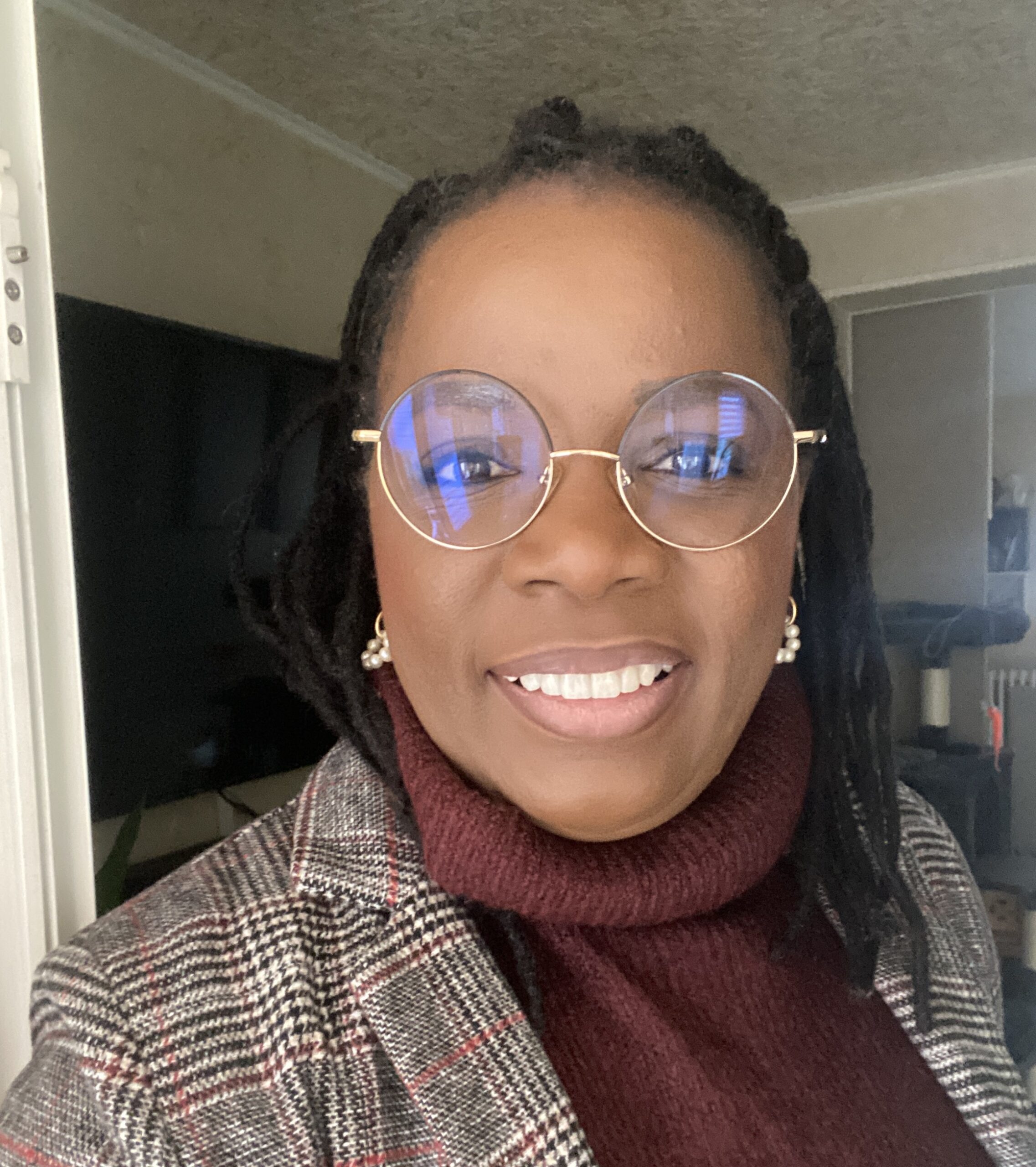
In her own words, on the impact of AASR on her career:
“AASR has been a collegial scholarly community that has provided an intellectual home in which rigorous work on religion in Africa can be shared, tested, and strengthened. Its conferences and networks facilitate valuable interdisciplinary exchange, and they make it possible to build collaborations across regions and career stages.”
1. Tell us about yourself; your academic background and research interests.
I am Dr Claire P. Ayelotan, a scholar of Theology and Religious Studies with training in law. My work sits at the intersection of religion, ethics, and socio-legal analysis, with a focus on belief-linked harm and the ways religious narratives shape social life, moral judgement, and vulnerability. I also examine how accusation logics extend to nonhuman animals—companion animals and livestock alike—when creatures are framed as spiritual agents, ‘familiars’, or ritual instruments, and how this moral reasoning can normalise cruelty and social indifference. My scholarship is intentionally interdisciplinary: there is no single discipline adequate for studying witchcraft accusations and related harm. I therefore draw on theology and religious studies alongside socio-legal analysis, qualitative sociology/anthropology, ethics, and safeguarding frameworks. While my early research centred on children and child protection, my current work also examines gendered vulnerability across the life course, including women and older persons. I am particularly interested in how Pentecostal and wider Christian publics interpret misfortune, spiritual danger, and responsibility—and how those interpretations can either protect people or place them at risk. My broader research interests include safeguarding, gendered violence, social justice, and the ethical and practical questions raised when accusations (especially witchcraft accusations) are weaponised in family and community conflicts.
2. Tell us a little bit more about your recently published book.
My recently published book, Yoruba Pentecostalism and Child Witchcraft Accusations (University of Rochester Press, 2025), https://boydellandbrewer.com/book/yoruba-pentecostalism-and-child-witchcraft-accusations-9781648251238/ examines h ow accusations against children emerge, travel, and gain credibility within certain Pentecostal and wider social contexts. The book traces the narratives, rituals, and institutional dynamics that shape the process of accusation-making, as well as the consequences for children and families. It pays close attention to the moral worlds in which people live: what fear does, how spiritual language is used, and how “deliverance” practices can become entangled with stigma, violence, and exclusion. While the subject matter is painful, the book is ultimately concerned with protection—how communities can move from suspicion and harm toward safeguarding and ethical responsibility.
3. In what ways do you think your research addresses pressing societal challenges?
My research addresses urgent challenges at the level of human dignity and everyday safety. Belief-linked accusations often target those with the least power—children, widows, older women, people living with disabilities, and families under economic strain. My work keeps children at the centre—because accusations often begin there—but it also traces how the same moral panics and accusation logics extend to women and other vulnerable people in contexts of crisis, uncertainty, and inequality. This extends beyond human targets: when animals are imagined as carriers of witchcraft or tools of ritual power, harm is displaced onto them (and sometimes justified), revealing how fear can reorganise ethical responsibility across both human and nonhuman life. When an accusation “sticks,” it can lead to ostracism, dispossession, violence, or death. These are not abstract questions: they concern lives that should have been lived fully, and futures that have been cut short. By analysing how accusations are produced and legitimised, my work contributes to safeguarding practice, public awareness, and policy conversations around protection, justice, and accountability. It also speaks to the Sustainable Development Goals—especially SDG 16—by engaging questions of violence prevention, access to justice, and inclusive societies.
4. How do you see your career/research developing and evolving in the near future?
In the near future, I intend to expand my work in three directions through an explicitly interdisciplinary lens that connects religious narratives, social practice, and legal/rights-based responses. First, I will deepen my research on gendered harm—especially the links between witchcraft accusations, property struggles, and violence against women. Second, I will develop comparative and transnational work that considers how these dynamics travel across African and diaspora contexts through media, migration, and religious networks. Third, I will continue to strengthen the applied dimension of my scholarship by contributing to safeguarding training, interdisciplinary partnerships, and public-facing writing that support practitioners, faith communities, and policy stakeholders.
5. From your wealth of experience, what advice would you give to your younger self?
I would tell my younger self: do not confuse endurance with calling. Protect your time, your health, and your boundaries—because sustainable scholarship requires a sustainable life. Seek mentors early—especially honest mentors—and build collaborations with genuine, principled people who respect your work, and let evidence—not noise—guide your confidence. Do not take your participants/interviewees for granted; protect them. Most importantly, never lose sight of the human beings behind the research questions. The people we write about are not ‘cases’; they are lives with dignity, histories, and futures.
6. What role has the AASR played in your career growth?
AASR has been a collegial scholarly community that has provided an intellectual home in which rigorous work on religion in Africa can be shared, tested, and strengthened. Its conferences and networks facilitate valuable interdisciplinary exchange, and they make it possible to build collaborations across regions and career stages. For scholars working on sensitive topics, that collegial space matters: it reminds us that careful, ethical scholarship is a collective responsibility, not an individual burden.
7. Tell us the challenge(s) you encountered in your career and how you surmounted them. What lessons did you learn?
One recurring challenge has been researching issues that are emotionally demanding and publicly misunderstood. Interdisciplinary work can also be difficult to “place” institutionally, so I have had to learn how to translate my contribution across fields without softening the ethical stakes.
Work on witchcraft accusations and belief-linked harm attracts peculiar pressures: sensationalism when the topic is treated as entertainment; denial when it is treated as an embarrassment; and defensiveness when it is treated as an accusation against “culture” or “religion.” I have had direct confrontations with senior scholars—often of African background—who question why I would “waste” scholarly attention on witchcraft. In everyday academic life, the same logic appears in plain speech: colleagues express their fear of witchcraft as a matter of fact, and some have even asked me why, as an African, I keep cats as pets—as though that alone should settle the argument.
These experiences have taught me that the persistence of witchcraft accusations is not simply a problem of ignorance. It is also a problem of mindset—individual and collective—about how misfortune is explained, how suspicion is normalised, and how certain bodies (children, widows, older women, people living with disabilities) are made available for blame. This is precisely why Symbolic Interactionism remains a primary tool in my work: it helps explain how meanings are produced, repeated, authorised, and then weaponised—until an accusation feels “true” enough to justify ostracism, dispossession, violence, or death.
They have also forced a hard question about ‘education.’ Many of the people who circulate and legitimise these accusations—inside and outside religious settings—are highly educated. This exposes a painful gap: education does not automatically produce ethical judgment, critical reflexivity, or commitment to safeguarding. It is one thing to be educated; it is another to be morally aligned and practically attuned to harm prevention, especially when the vulnerable are at risk.
I have surmounted these challenges by refusing both cynicism and naïveté: grounding my work in careful method, strong ethics, and interdisciplinary dialogue, while holding a firm line on accountability. The central lesson I have learned is simple: clarity is a form of care. When we name harm truthfully, we create space for protection and repair—and for societies in which the most vulnerable can live the lives they were meant to live, rather than having those lives shortened by fear dressed up as certainty.

